🍄 Introduction
Few ingredients in nature capture mystery and flavor like wild mushrooms.
From their earthy aroma to their meaty texture, mushrooms are the ultimate gift of the forest.
But cooking with them requires knowledge — because while some are culinary treasures, others can be dangerous if misidentified.
This guide will help you safely identify, prepare, and cook wild mushrooms to create meals that taste straight from nature’s kitchen.
🌲 Step 1: Identify Edible Mushrooms
Before you start cooking, you must learn how to recognize safe species.
Here are a few well-known edible mushrooms:
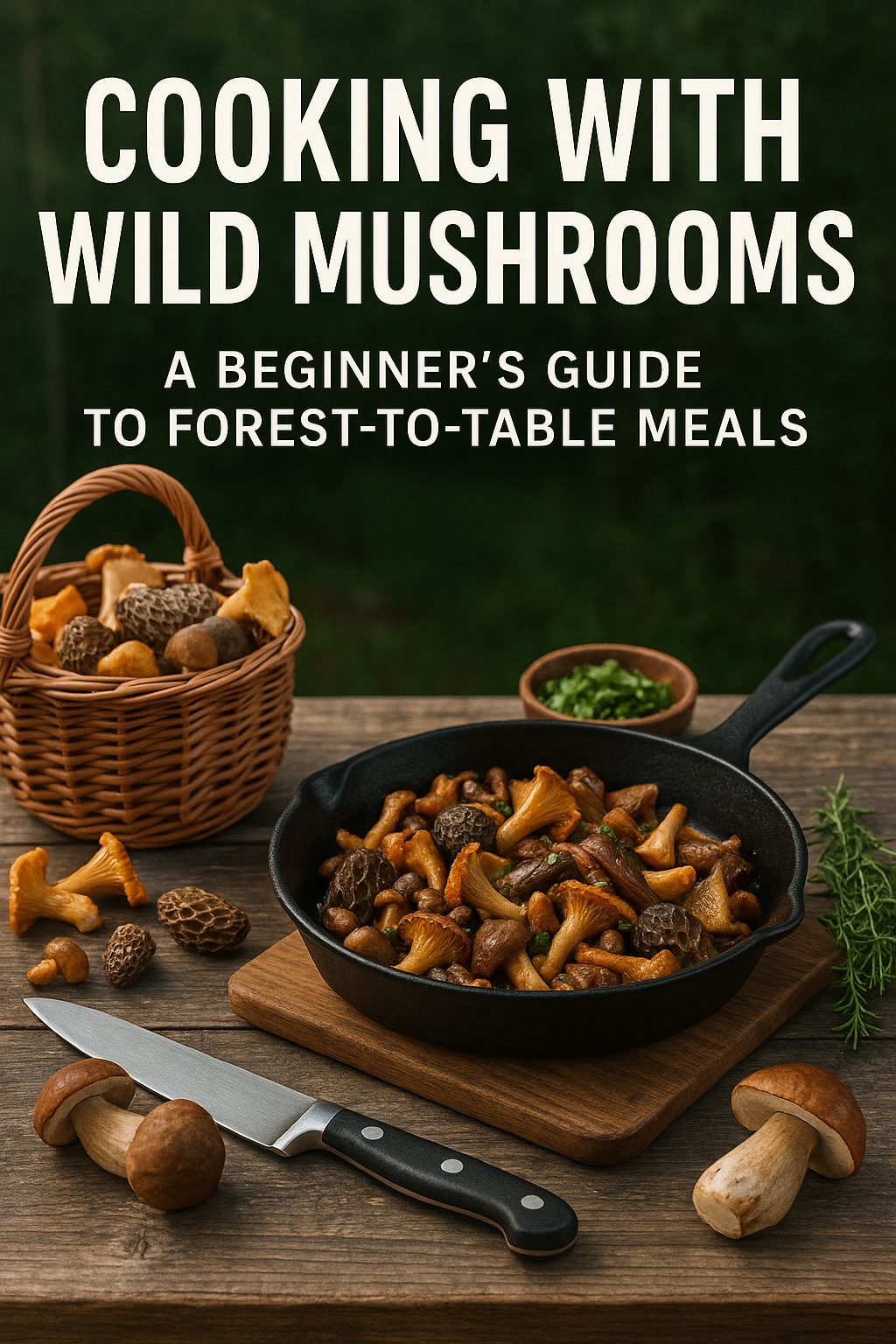
- Chanterelles: Golden, trumpet-shaped, with a fruity aroma.
- Morels: Honeycomb-shaped caps, nutty flavor, great for frying.
- Porcini: Thick, brown cap and a deep, savory taste.
- Oyster mushrooms: Fan-shaped, soft texture, mild flavor.
⚠️ Avoid any mushrooms with white gills, red caps, or milky sap — many of these are poisonous.
When in doubt, consult a local expert or mycology app.
🍳 Step 2: Clean and Prepare Properly
Never eat wild mushrooms raw.
Use a soft brush or damp cloth to remove dirt — avoid washing under water, as mushrooms absorb moisture.
Slice them evenly and cook them soon after for best flavor and safety.
🔥 Step 3: Cooking Techniques
Wild mushrooms are versatile and can be cooked in many ways:
- Sautéed: Use butter, olive oil, garlic, and thyme for a rich forest flavor.
- Grilled: Great for porcini or oyster mushrooms — they hold shape well.
- Creamy Mushroom Soup: Combine wild mushrooms, cream, and herbs for a comforting meal.
- Pasta with Wild Mushrooms: Toss sautéed mushrooms with pasta, butter, and Parmesan.
🔥 Pro Tip: Don’t overcrowd your pan — mushrooms release water and need space to brown beautifully.
🪵 Step 4: Storing Wild Mushrooms
Fresh mushrooms last 3–5 days in the fridge.
For longer storage, dry them using a dehydrator or hang them in a warm, airy room.
Rehydrate before use by soaking in warm water — it intensifies the flavor.
🌿 Step 5: Safety Reminder
Always be 100% certain before eating wild mushrooms. Even small mistakes can be harmful.
Avoid picking from polluted areas and always cook thoroughly before serving.
🌄 Conclusion
Cooking with wild mushrooms is like uncovering nature’s secret ingredient.
Their earthy, rich taste turns simple dishes into unforgettable experiences.
Once you learn to identify and cook them safely, the forest becomes your gourmet market.
❓ FAQ Section
🔸 What’s the best wild mushroom for beginners?
Chanterelles and oyster mushrooms are great starters — easy to identify and cook.
🔸 Can I freeze wild mushrooms?
Yes, but sauté them first. Raw mushrooms lose flavor and texture when frozen.
🔸 Are all wild mushrooms edible when cooked?
No — some remain toxic even after cooking. Always verify species first.
🔸 How can I tell if a mushroom is poisonous?
If it has white gills, a red cap, or a ring around the stem, avoid it unless you’re an expert.
🧠 SEO Keywords:
wild mushrooms cooking, forest mushrooms, mushroom recipes, foraging mushrooms, edible fungi, mushroom identification, outdoor cooking, wild food guide, mushroom safety tips