🌿 Introduction
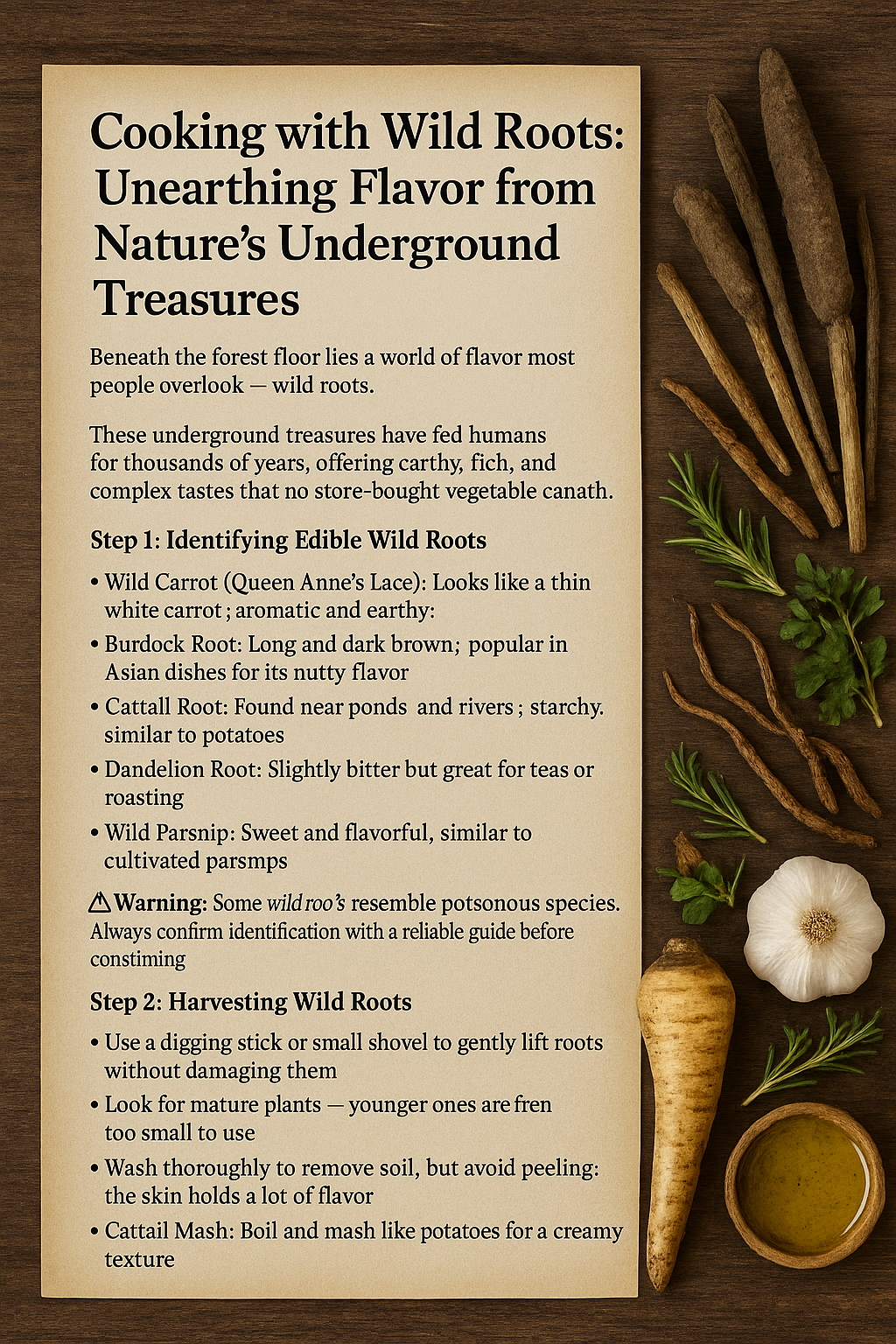
Beneath the forest floor lies a world of flavor most people overlook — wild roots.
These underground treasures have fed humans for thousands of years, offering earthy, rich, and complex tastes that no store-bought vegetable can match.
Learning to cook with wild roots reconnects you to the raw essence of food — simple, nourishing, and deeply satisfying.
🌱 Step 1: Identifying Edible Wild Roots
Before you dig, it’s important to know what you’re looking for.
Here are some of the most common edible roots found in nature:
- Wild Carrot (Queen Anne’s Lace): Looks like a thin white carrot; aromatic and earthy.
- Burdock Root: Long and dark brown; popular in Asian dishes for its nutty flavor.
- Cattail Root: Found near ponds and rivers; starchy, similar to potatoes.
- Dandelion Root: Slightly bitter but great for teas or roasting.
- Wild Parsnip: Sweet and flavorful, similar to cultivated parsnips.
⚠️ Warning: Some wild roots resemble poisonous species. Always confirm identification with a reliable guide before consuming.
🪵 Step 2: Harvesting Wild Roots
Use a digging stick or small shovel to gently lift roots without damaging them.
Look for mature plants — younger ones are often too small to use.
Wash thoroughly to remove soil, but avoid peeling; the skin holds a lot of flavor.
🌿 Pro Tip: The best time to harvest is late fall or early spring, when plants store energy in their roots.
🍳 Step 3: Cooking with Wild Roots
Wild roots are versatile and can be used in many ways:
- Roasted Roots: Toss in olive oil, salt, and herbs, then roast until crispy.
- Wild Root Soup: Boil chopped roots with garlic and onions for a rich, earthy broth.
- Burdock Stir-Fry: Slice thin and sauté with soy sauce and sesame oil.
- Cattail Mash: Boil and mash like potatoes for a creamy texture.
🔥 Pro Tip: Slow-cooking wild roots brings out their natural sweetness and depth.
🌾 Step 4: Preserving Wild Roots
Dry sliced roots in the sun or a dehydrator, then store in glass jars.
You can also pickle roots like dandelion or burdock for long-term storage and unique flavor.
🌄 Conclusion
Cooking with wild roots reminds us that food doesn’t need to come from a store to be amazing.
It’s about rediscovering flavors buried in the earth — honest, raw, and full of history.
So grab a shovel, explore your surroundings, and dig into the heart of nature’s kitchen.
❓ FAQ Section
🔸 Are wild roots safe to eat?
Yes, if identified correctly. Always confirm with a trusted foraging guide or expert.
🔸 Can I eat wild roots raw?
Some, like cattail and dandelion, can be eaten raw in small amounts, but most taste better cooked.
🔸 How do I clean wild roots?
Scrub gently under running water; avoid soap or harsh cleaning products.
🔸 What do wild roots taste like?
Each has a unique flavor — some earthy like potatoes, others sweet or nutty.
🧠 SEO Keywords:
wild roots, foraging roots, cooking with nature, edible roots, burdock root recipes, outdoor cooking, forest food, natural ingredients, survival cooking