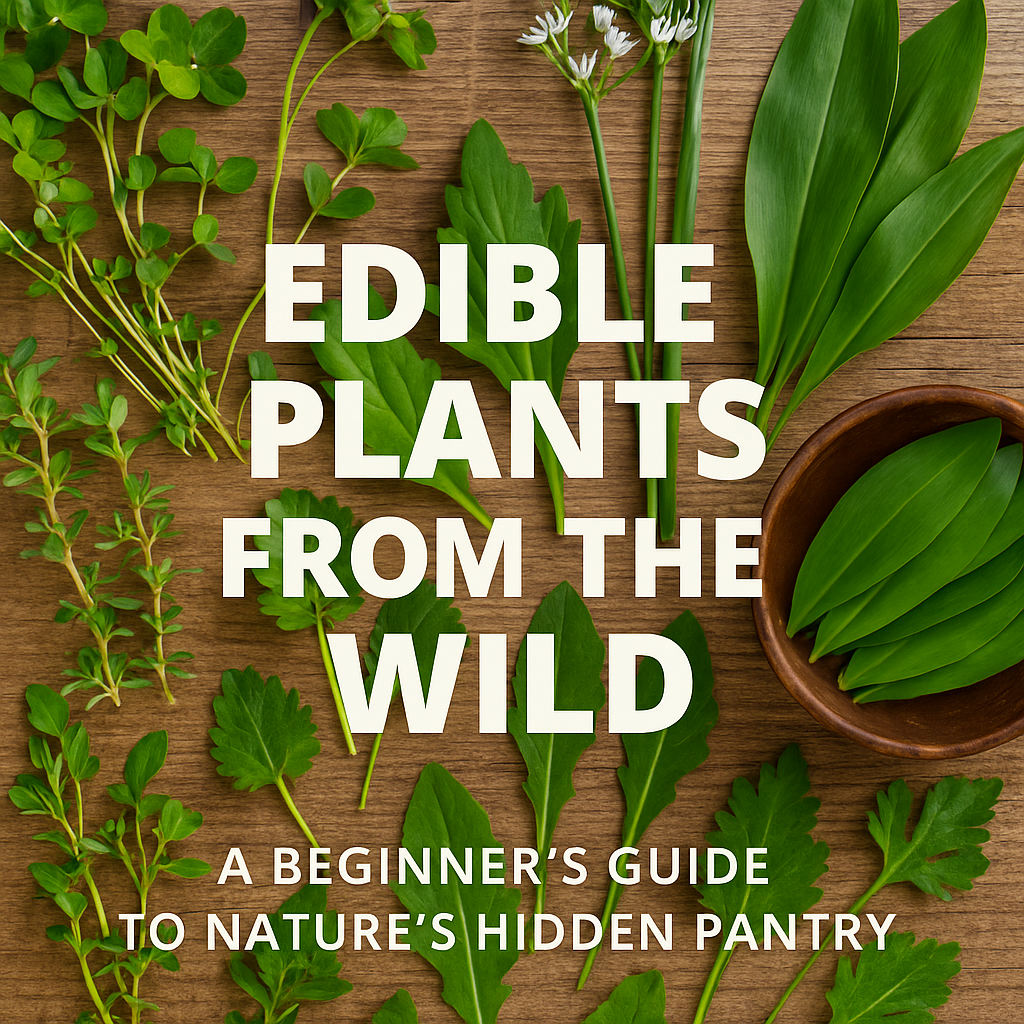
🌿 Introduction
Imagine walking through a quiet forest and realizing that everything around you — leaves, flowers, and roots — could be part of your next meal.
For centuries, humans have relied on wild edible plants for nutrition and medicine. Today, rediscovering these natural ingredients brings both flavor and mindfulness back to our cooking.
This guide will teach you how to find, identify, and use edible plants from the wild to create healthy, sustainable, and delicious meals.
🌱 Step 1: Learn What’s Safe to Eat
When it comes to wild plants, knowledge is everything.
Here are a few easy and safe options for beginners:
- Dandelion: Leaves are great in salads; roots can be roasted into coffee.
- Wild Garlic: Delicious in soups, sauces, and pestos.
- Plantain (the weed, not the fruit): Young leaves are edible when cooked.
- Chickweed: Soft leaves perfect for sandwiches and omelets.
- Clover: Flowers can be steeped in tea.
⚠️ Important: Avoid any plant you can’t positively identify. Some toxic plants look very similar to edible ones.
🌾 Step 2: How to Harvest Responsibly
Take only what you need — never strip an entire patch.
Pick plants from clean areas, far from roads or polluted water.
Use a knife or scissors to avoid damaging the roots, and always wash your harvest before eating.
🌿 Pro Tip: The best time to forage is early morning when leaves are fresh and full of moisture.
🍳 Step 3: How to Cook Wild Edible Plants
Cooking wild plants is easy and fun! Here are a few tasty ways to start:
- Dandelion Greens Stir-Fry: Sauté with olive oil, garlic, and lemon.
- Wild Garlic Soup: Blend wild garlic with potatoes and cream.
- Chickweed Omelet: Soft, herby, and perfect for breakfast.
- Plantain Chips: Coat leaves in olive oil and bake until crispy.
Most wild greens can be used just like spinach — boiled, sautéed, or added fresh to salads.
🍋 Step 4: Nutritional Benefits
Wild plants are often richer in vitamins and minerals than supermarket vegetables.
They contain iron, calcium, magnesium, and plenty of antioxidants that boost immunity and detoxify the body.
Plus, they’re free — straight from nature’s garden!
🌄 Conclusion
Cooking with edible plants is more than just a trend — it’s a return to simplicity and balance.
By learning to recognize what nature offers, you gain a new appreciation for food and the world around you.
So next time you take a walk outdoors, bring a basket — your next gourmet ingredient might be growing right under your feet.
❓ FAQ Section
🔸 Is it safe to eat wild plants?
Yes, but only if you can identify them correctly. Always double-check with a reliable guide.
🔸 What are the easiest wild plants to start with?
Dandelion, wild garlic, and chickweed are great beginner options.
🔸 Can I eat raw wild plants?
Some can be eaten raw, but others (like nettles) should be cooked to remove stings or bitterness.
🔸 How do I store wild plants?
Keep them in a cool, dry place or refrigerate in damp paper towels for up to 3 days.
🧠 SEO Keywords:
edible wild plants, foraging guide, wild food recipes, cooking with nature, natural ingredients, wild herbs, healthy outdoor meals, forest plants, beginner foraging