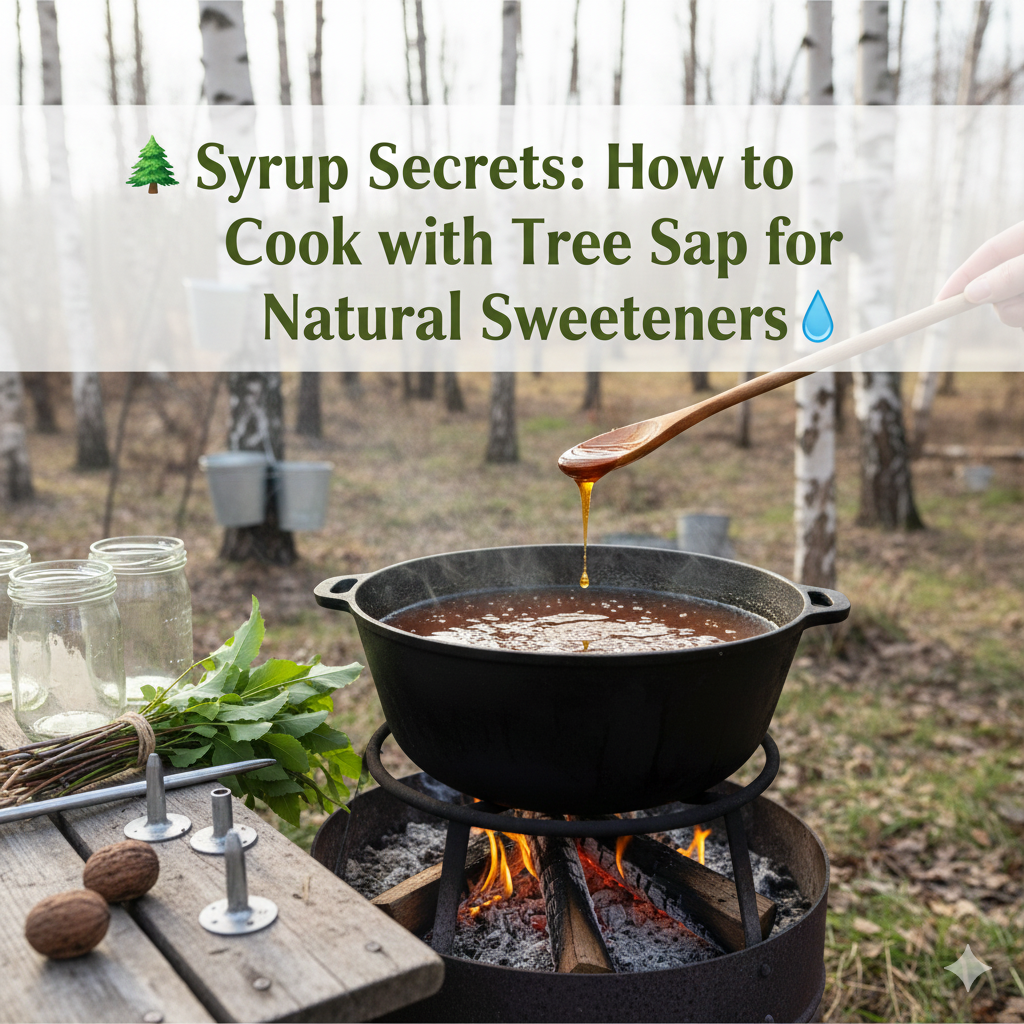
Have you ever considered where your sweetness comes from? Most of us default to cane sugar or honey, but the forest holds an incredible, ancient secret: tree sap.
It’s true. Maple trees aren’t the only source of liquid gold. Many other hardwood trees, like birch and walnut, offer their own unique, subtlely flavored sap.
Tapping trees for their sweet bounty is a time-honored tradition. It connects you directly to the slow rhythm of the changing seasons.
If you love the idea of using truly wild, natural ingredients, learning to cook with tree sap is a deeply rewarding culinary adventure. Let’s look at how you can transform this clear, watery liquid into a deeply flavorful syrup.
💧 Why Cook with Tree Sap?
The appeal of using tree sap goes beyond just finding a new sweetener. It’s about taste, nutrition, and sustainability.
Birch and walnut sap offer distinct flavor profiles that differ greatly from maple. Birch sap has a slightly tart, almost minerally note, while walnut sap is often nuttier and smoother.
Plus, pure sap is incredibly healthy. It’s mostly water, but it contains small amounts of minerals, vitamins, and electrolytes, especially B vitamins and manganese.
Using it in your kitchen is an exciting way to showcase the subtle, seasonal flavors of the wild. It gives your dishes a unique, earthy complexity.
❄️ When to Tap: The Season of Sap
Tapping is entirely dependent on the weather, making it a truly seasonal experience. You are looking for a very specific window in late winter or early spring.
This is when the trees are just waking up from their dormancy. The sap begins to flow as temperatures consistently rise above freezing during the day (around $40^\circ\text{F}$ or $5^\circ\text{C}$) but drop back below freezing at night.
The freeze-thaw cycle creates pressure that pushes the sap up from the roots to the branches. Once the tree buds start to swell, the sap changes composition, and tapping season is over.
🛠️ Step-by-Step Guide: Tapping and Reducing Tree Sap
The most important step in cooking with sap is the initial harvest and reduction process. This is how you concentrate the watery liquid into a thick, usable syrup.
1. Tapping the Tree Safely
You’ll need a drill, a clean collection bucket, and a sterile spout (or “spile”).
- Select a Healthy Tree: Choose a mature, healthy tree with a trunk diameter of at least 10 inches (25 cm). Never tap a tree that looks stressed or young.
- Drill the Hole: Drill a clean, upward-angled hole about 4 to 6 feet up the trunk. The hole should be deep enough to enter the sapwood (about 1.5 to 2 inches, or 4-5 cm).
- Insert the Spile: Gently tap the spile into the hole until it is snug. Hang your collection bucket from the spile.
- Collect and Stop: Collect the clear sap over a few days. Once you are done, remove the spile and plug the hole with a piece of sterile dowel to protect the tree.
2. Filtering the Sap
Fresh sap is clear, but it may contain small bits of bark or debris from the collection process.
- Initial Filter: Pour the collected sap through a fine-mesh sieve or a piece of cheesecloth into a large stockpot. This removes any large particulate matter.
- Keep it Cold: Store the sap in a very cold place or a refrigerator if you cannot process it immediately. It can spoil quickly.
3. Reducing the Sap into Syrup
Sap is mostly water, so the reduction process is slow, requiring a high volume of sap to yield a small amount of syrup.
- Start the Boil: Pour the filtered sap into a wide, heavy-bottomed pot. A wide pot is crucial as it increases the surface area for evaporation.
- Maintain a Steady Boil: Bring the sap to a rolling boil. Continue to boil, uncovered, allowing the excess water to evaporate. This process can take many hours.
- Watch for Finish: As the volume significantly decreases (it can be a 40:1 ratio for birch), the liquid will thicken, darken slightly, and start to foam. The temperature will rise above the boiling point of water.
- Check the Consistency: The syrup is finished when it reaches $7^\circ\text{F}$ above the boiling point of water (around $219^\circ\text{F}$ or $104^\circ\text{C}$) or when it coats a spoon nicely.
- Final Filter and Bottle: Filter the hot syrup one last time through a cloth filter to remove any “sugar sand” (natural mineral precipitates). Pour the finished hot syrup into sterilized, airtight jars and seal immediately.
🍯 Culinary Uses for Birch and Walnut Syrup
Once you have your precious syrup, you can use it just like maple syrup, but its unique flavor opens up new avenues.
Birch Syrup
The slight tartness of birch syrup pairs beautifully with savory dishes and robust flavors.
- Glazes: Brush it onto roasted root vegetables or grilled salmon for a caramelized, tangy crust.
- Baking: Use it to replace a portion of the sugar in dark bread or a rye cake recipe.
- Sauces: Whisk it into vinaigrettes for a complex, less cloyingly sweet dressing.
Walnut Syrup
Walnut syrup is milder and often has a deeper, buttery note, perfect for desserts.
- Pancakes and Waffles: The classic use, of course! Its flavor complements nuts and fruits perfectly.
- Dessert Topping: Drizzle it over ice cream, yogurt, or a piece of sharp cheese.
- Cocktails: Use it as a natural sweetener in an Old Fashioned or another whiskey cocktail for an earthy twist.
✨ Conclusion: A Taste of the Wild
The journey from tapping a tree to drizzling that homemade syrup on your morning pancakes is deeply satisfying. It’s a testament to the bounty of nature and the simple joy of working with wild ingredients.
Cooking with tree sap is a patience project, requiring dedication during a specific time of year. But the resulting flavor—unique, natural, and entirely your own—is absolutely worth the wait. Go ahead, tap into nature’s sweet secret!
❓ Frequently Asked Questions (FAQ)
Q1: Is birch sap edible right off the tree, or must it be boiled?
Yes, fresh birch sap is drinkable right off the tree! It’s highly sought after as a mineral-rich, refreshing spring tonic. However, you must boil it down to create a thick, stable syrup for preservation and concentrated sweetness.
Q2: How much sap do I need to make one quart of syrup?
The yield ratio varies significantly by tree species. For birch sap, the ratio is quite high, often 80:1 (80 gallons of sap for 1 gallon of syrup). Walnut is usually better, closer to 40:1, while maple is the most efficient, around 40:1.
Q3: Can I tap other trees besides maple, birch, and walnut?
Yes, you can! Box elder, sycamore, and ironwood all produce sweet, tap-able sap. However, always confirm the species and follow proper tapping guidelines to avoid harming the tree.
Q4: How long does homemade tree syrup last?
When properly reduced, filtered, and sealed hot in sterilized jars, the finished syrup can last for one to two years in a cool, dark place. Once opened, store it in the refrigerator.
Q5: What is “sugar sand,” and is it safe?
Sugar sand (or niter) is a harmless, gritty mineral deposit that naturally precipitates out of the sap during the boiling process. It’s safe to consume, but for a smooth syrup, you filter it out just before bottling.
Q6: Does tapping hurt the tree?
When done properly on a mature, healthy tree, tapping causes minimal stress. The small wound heals quickly. Sustainability is key: only tap a small percentage of a tree’s circumference and plug the hole after use.