🍃 Introduction
There’s something magical about using wild herbs in cooking.
Each leaf and stem holds the essence of the forest — strong, aromatic, and full of life.
Unlike store-bought spices, wild herbs grow freely in untouched soil, soaking up the sun and rain. Cooking with them adds not only flavor but also a deep connection to nature.
In this guide, you’ll learn how to find, harvest, and cook with wild herbs to elevate your dishes naturally.
🌱 Step 1: Identify Edible Wild Herbs
Before harvesting, it’s important to recognize which herbs are safe.
Here are a few common and delicious wild herbs:
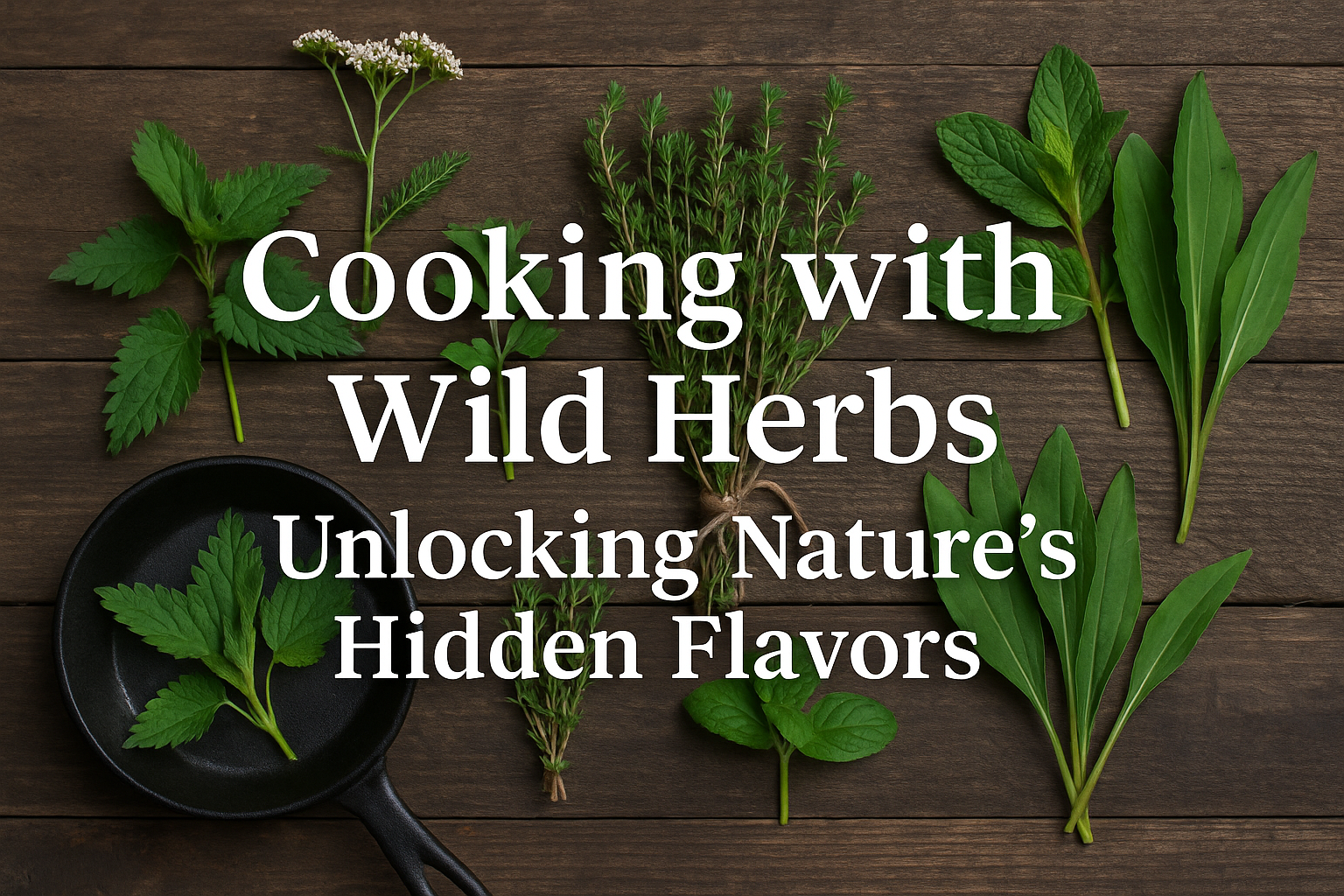
- Wild thyme: Fragrant and perfect for roasting meat or potatoes.
- Yarrow: Has a slightly bitter taste — ideal for soups and stews.
- Wild mint: Refreshing, great for teas, salads, or desserts.
- Nettle: Cooked nettles taste similar to spinach, rich in nutrients.
- Chicory leaves: Slightly spicy and delicious in salads.
🔥 Pro Tip: If you’re unsure about a plant, don’t eat it. Always cross-check with a trusted field guide.
🌿 Step 2: Harvest the Right Way
Pick herbs early in the morning when oils are most concentrated.
Use scissors to snip leaves instead of pulling them — this helps the plant regrow.
Avoid foraging near polluted areas or roadsides; choose clean, wild habitats instead.
🍳 Step 3: Cooking with Wild Herbs
Wild herbs can be used in nearly every dish — you just need to balance their flavor.
Here are some delicious ideas:
- Wild Herb Omelette: Combine eggs, nettles, and wild thyme for a rustic breakfast.
- Herbal Infused Butter: Mix soft butter with chopped mint and yarrow for toast or steak.
- Forest Tea: Steep wild mint and nettle leaves for a calming drink.
- Wild Herb Marinade: Blend thyme, garlic, and olive oil for grilled meats or veggies.
🌿 Wild herbs taste best when added fresh at the end of cooking.
🪵 Step 4: Preserving Your Herbs
To enjoy them all year round, dry your herbs naturally.
Hang them upside down in a dry, shady place for about a week. Once dry, crumble and store them in airtight jars away from sunlight.
You can also freeze chopped herbs in olive oil cubes — a perfect natural seasoning for later use.
🌄 Conclusion
Cooking with wild herbs isn’t just about flavor — it’s about rediscovering your bond with nature.
Each meal becomes an adventure, filled with earthy aromas and authentic tastes.
Next time you walk through a field or forest, look around — nature’s spice rack might be right under your feet.
❓ FAQ Section
🔸 Which wild herbs are safe to eat?
Common safe herbs include wild thyme, mint, nettles, and yarrow. Always verify identification before eating.
🔸 Can wild herbs replace store-bought spices?
Yes! Wild herbs often have stronger, fresher flavors than dried spices from stores.
🔸 How can I store wild herbs for long periods?
Dry them in a cool, shaded place and store in sealed glass jars or freeze in oil cubes.
🔸 What’s the best time to harvest wild herbs?
Early morning, just after dew has evaporated, is when their essential oils are strongest.
🧠 SEO Keywords:
wild herbs, cooking with herbs, foraging herbs, natural flavoring, wild food recipes, edible plants, herbal cooking, outdoor foraging, forest herbs