🌿 Introduction
There’s something deeply satisfying about cooking with ingredients you’ve found yourself — straight from nature.
Whether it’s wild herbs, mushrooms, or edible flowers, nature’s pantry is full of flavors waiting to be discovered.
Cooking with wild ingredients isn’t just about food; it’s about creativity, patience, and respect for the environment.
This guide will show you how to safely find, prepare, and cook natural ingredients that transform your meals into wild gourmet experiences.
🌱 Step 1: Finding Wild Ingredients
The first step in cooking with nature is learning where to look.
You don’t need to travel far — wild ingredients can be found in forests, fields, or even your backyard.
Here are some popular and safe options:
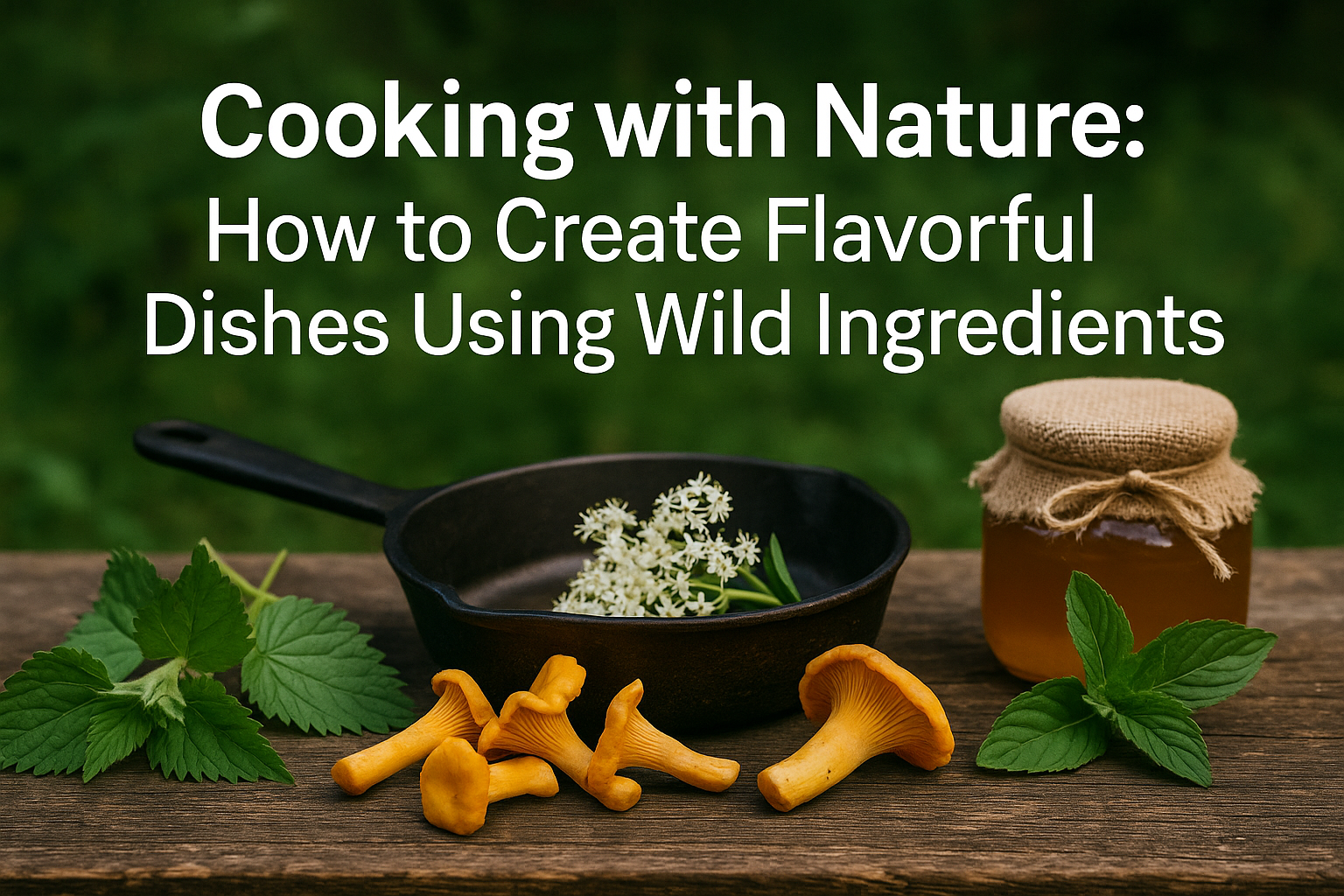
- Wild mint: fresh and aromatic, perfect for teas or desserts.
- Chanterelle mushrooms: golden and flavorful, ideal for pasta or soups.
- Nettle leaves: great for soups and smoothies after boiling.
- Wild garlic: the secret to vibrant, forest-inspired sauces.
- Elderflowers: perfect for syrups and refreshing summer drinks.
⚠️ Pro Tip: Avoid picking from roadsides or polluted areas, and always identify plants carefully.
🍳 Step 2: Preparing Your Ingredients
Most wild foods need gentle cleaning.
- Rinse with clean water to remove dirt.
- Trim any damaged parts.
- For herbs, chop finely to release flavor.
- For mushrooms, sauté or roast to bring out their earthy aroma.
🌿 Cooking wild ingredients is about enhancing their natural taste — not hiding it.
🪵 Step 3: Cooking Methods that Highlight Nature’s Flavor
Here are some simple, flavorful ideas:
- Wild Garlic Pesto: Blend wild garlic, olive oil, and nuts for a green, zesty sauce.
- Forest Mushroom Risotto: Combine wild mushrooms with rice, butter, and herbs.
- Nettle Soup: Rich, creamy, and full of vitamins.
- Wild Herb Flatbread: A rustic recipe with wild thyme and mint.
🔥 Pro Tip: Use cast iron cookware when possible — it distributes heat evenly and enhances natural aromas.
🌸 Step 4: Foraging with Care
Foraging responsibly ensures sustainability.
- Take only what you need.
- Never uproot entire plants.
- Leave enough for wildlife and regrowth.
Cooking with nature should always be in harmony with the environment.
🌄 Conclusion
Cooking with wild ingredients reconnects you with the earth.
Each dish becomes more than just food — it’s an experience of freedom, simplicity, and creativity.
So next time you step outside, look around — nature’s ingredients are closer than you think.
❓ FAQ Section
🔸 What are the best wild ingredients for beginners?
Wild mint, garlic, nettles, and dandelion greens are great starting options — easy to find and safe to cook.
🔸 Can I eat wild plants raw?
Some, like wild mint or clover, can be eaten raw, but others (like nettles) should be cooked first.
🔸 How do I store wild ingredients?
Keep them cool and dry, or freeze herbs in olive oil to preserve flavor.
🔸 Why cook with wild ingredients?
They offer richer nutrients, unique flavors, and an authentic connection to nature.
🧠 SEO Keywords:
cooking with wild ingredients, foraging food, outdoor cooking, wild herbs and mushrooms, natural recipes, forest cooking, sustainable food, nature-inspired meals