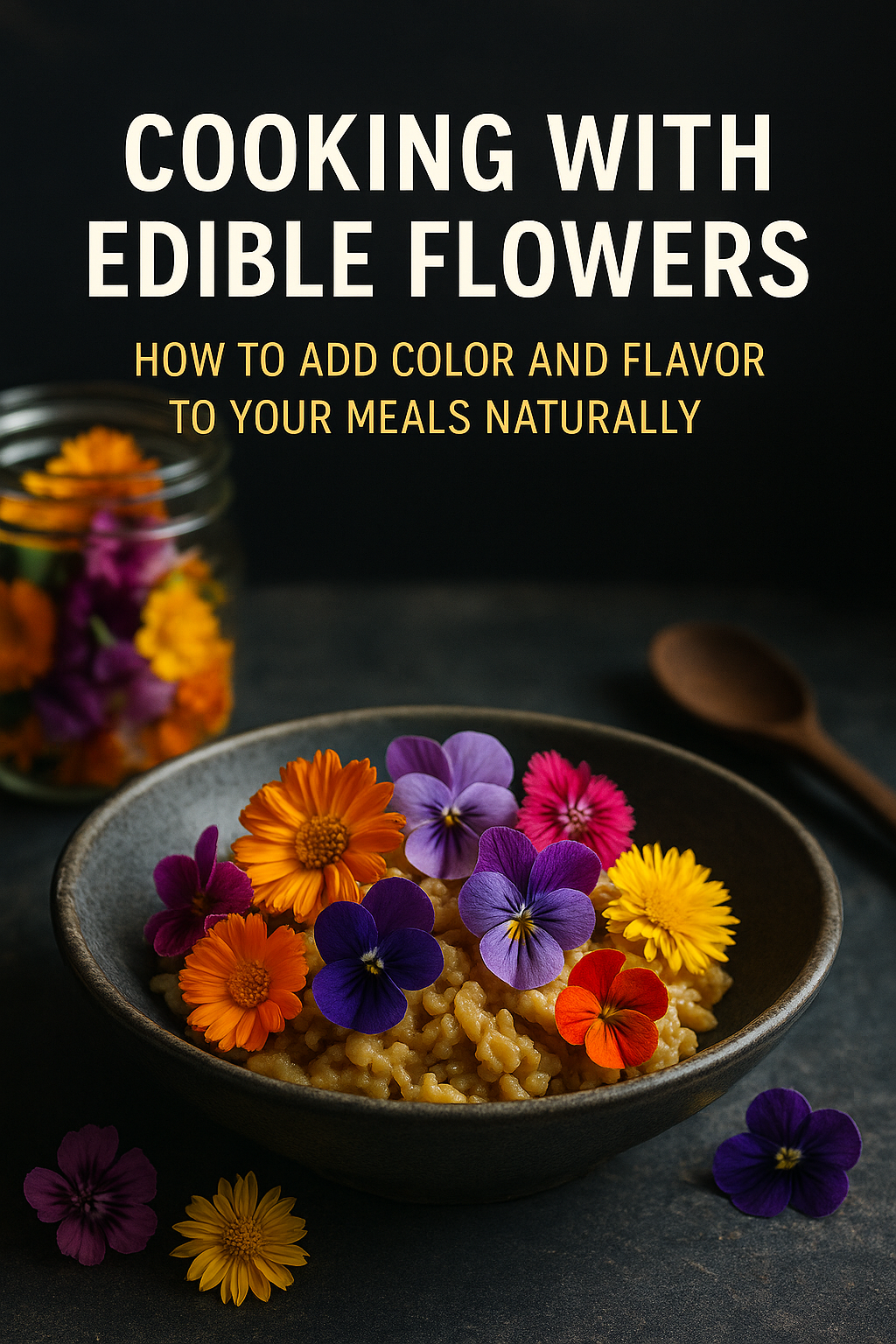
🌿 Introduction
Cooking with edible flowers is one of the most beautiful ways to connect food with nature.
For centuries, flowers have been used not just for decoration, but as delicate ingredients that bring aroma, color, and subtle sweetness to meals.
From salads to desserts, edible flowers can completely transform your plate — naturally and elegantly.
Here’s your guide to identifying, preparing, and cooking with edible flowers safely.
🌼 Step 1: Choosing Safe Edible Flowers
Not every flower is safe to eat.
Start with common, safe varieties that are easy to identify:
- Calendula (Marigold): Slightly peppery, great in salads and rice dishes.
- Nasturtium: Bright and spicy, perfect for garnishing sandwiches or soups.
- Violets: Sweet and beautiful — lovely in desserts or teas.
- Lavender: Floral and fragrant, great in baking or syrup.
- Dandelion petals: Slightly bitter, great for salads or fritters.
⚠️ Important: Avoid flowers from florists or sprayed with pesticides. Always use organically grown blooms.
🍳 Step 2: How to Prepare Flowers for Cooking
Rinse gently in cool water and pat dry. Remove stems and bitter parts like stamens.
Most flowers are best used fresh, but some like lavender or chamomile can be dried for teas or baking.
🌿 Pro Tip: Freeze petals in ice cubes — they make drinks look stunning!
🍰 Step 3: Creative Ways to Cook with Flowers
There are countless ways to add edible flowers to your cooking:
- Salads: Toss petals from marigolds, violets, and nasturtiums for color and flavor.
- Desserts: Use lavender or rose petals in cakes, cookies, or syrups.
- Butter & Honey: Mix edible petals into butter or honey for a floral twist.
- Teas & Drinks: Steep chamomile or hibiscus for calming, aromatic beverages.
- Pasta or Bread: Press petals into homemade dough for a gourmet touch.
Each flower adds not only taste but also a sense of art to your meal.
🌻 Step 4: Flavor Pairing Tips
Different flowers complement different dishes:
- Lavender pairs well with lemon or vanilla.
- Nasturtium complements cheese and salads.
- Calendula enhances rice, couscous, and soups.
- Rose adds depth to chocolate or cream desserts.
Experiment — but start with small amounts, as floral flavors can be strong.
🌸 Conclusion
Cooking with edible flowers turns every meal into a creative experience.
They invite color, fragrance, and joy into your kitchen while keeping your dishes 100% natural.
So next time you see a garden full of blooms, think beyond the bouquet — think farm-to-table beauty.
❓ FAQ Section
🔸 Are all flowers edible?
No. Only certain species are safe to eat — always research before using any flower in cooking.
🔸 How do I know if a flower is organic?
Pick from your own garden or trusted organic sources. Avoid store-bought decorative flowers.
🔸 Can edible flowers cause allergies?
If you have pollen allergies, start with small quantities to test your reaction.
🔸 How should I store edible flowers?
Keep them refrigerated in a sealed container with a damp paper towel — they stay fresh for up to 3 days.
🧠 SEO Keywords:
edible flowers, cooking with flowers, floral recipes, natural ingredients, food decoration, flower-based dishes, garden cooking, healthy recipes, nature-inspired food